Velices de High Tech High International:
10th Grade Project Plan, Handout, Prototype, and Prototype Reflection
This document outlines the full design, scaffolding, and assessment plan for my Velices/Suitcases project-based learning unit and culminating Exhibition.
View Backwards Planner Here:
https://drive.google.com/file/d/1fz9DcJXTvmRh5Ka-Kkyr8K9XhJszEtU4/view?usp=sharing
Velices de High Tech High International Project Handout/Flyer
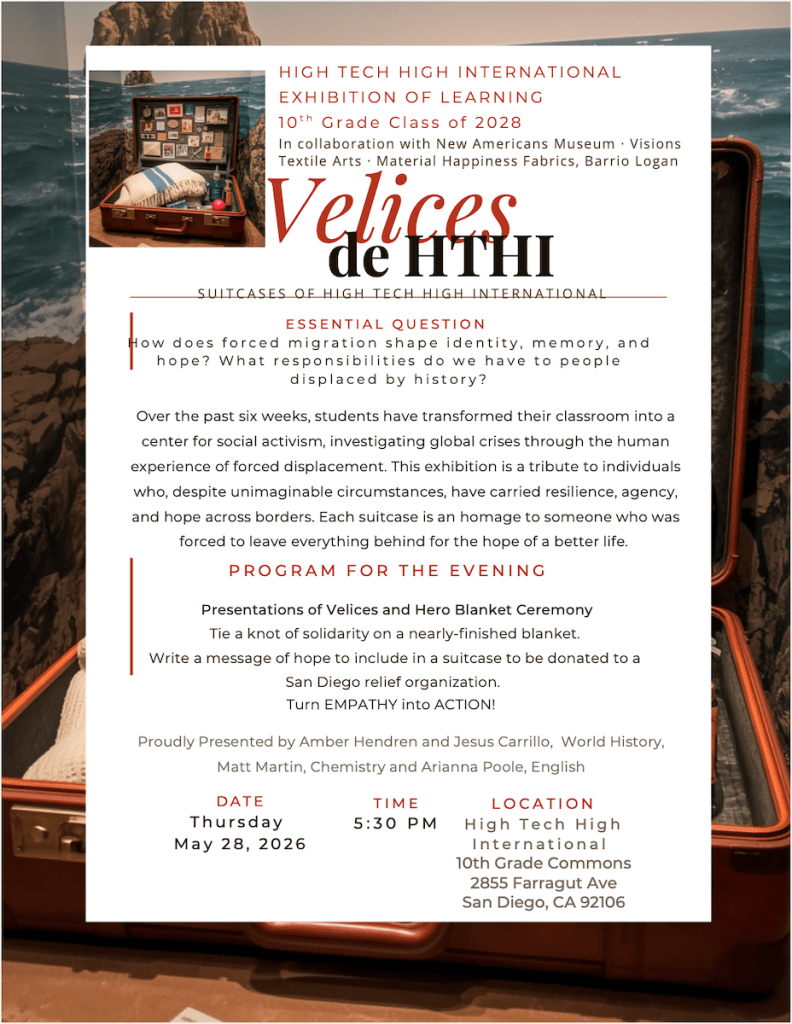
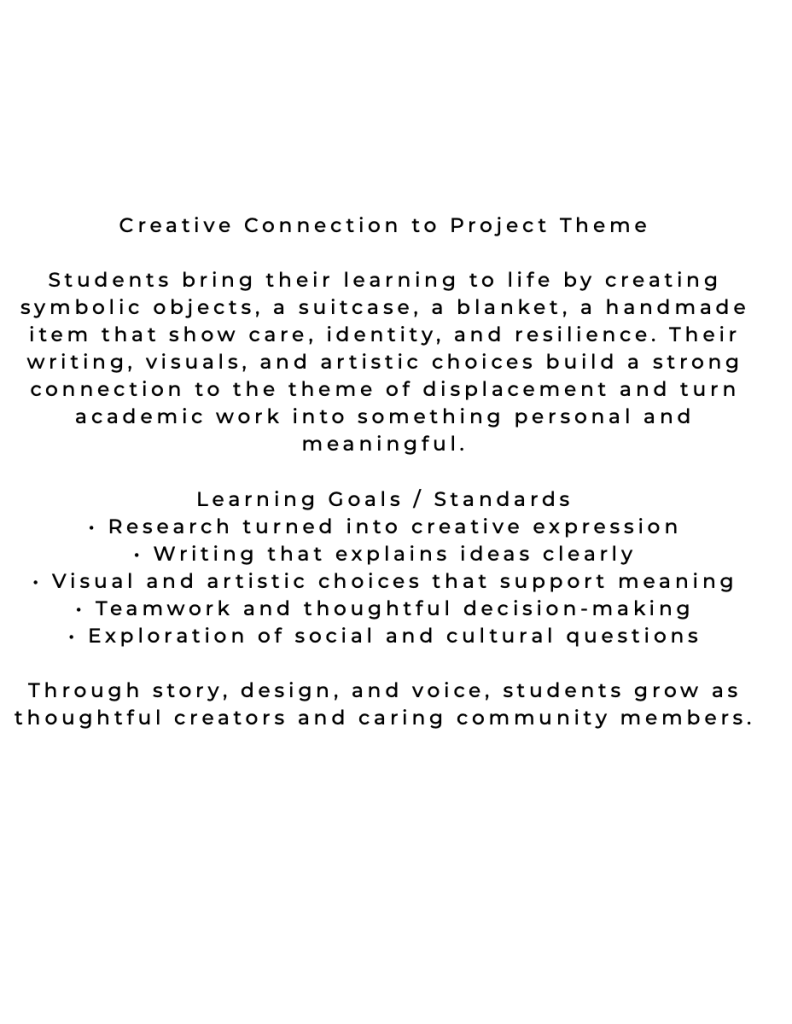
Velices
Prototypes, Iterations, and Reflections
It all starts with the story.
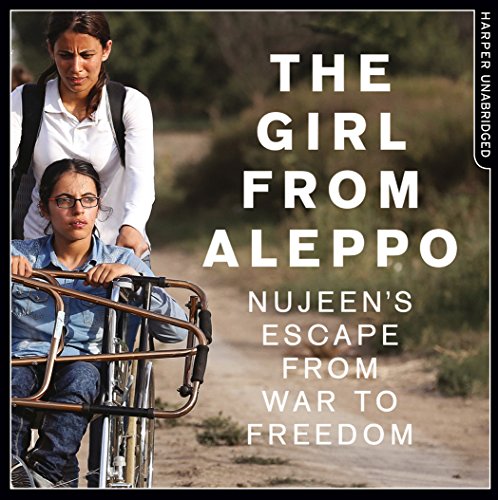
This began with learning about Nujeen Mustafa. A disabled Syrian girl who fled her home and traveled with her sister across 4 countries, and on a raft across the Aegean to seek asylum in Germany. Nujeen is no ordinary teenager. Nujeen is why I started this. Here’s where it led me. I was inspired by learning that the art teacher at HTH Media Arts does 4 versions of every project. I start them, but I think I’ll let students take over from here. They are far more artistic than I am. I am excited to put their talents and compassion to great use!
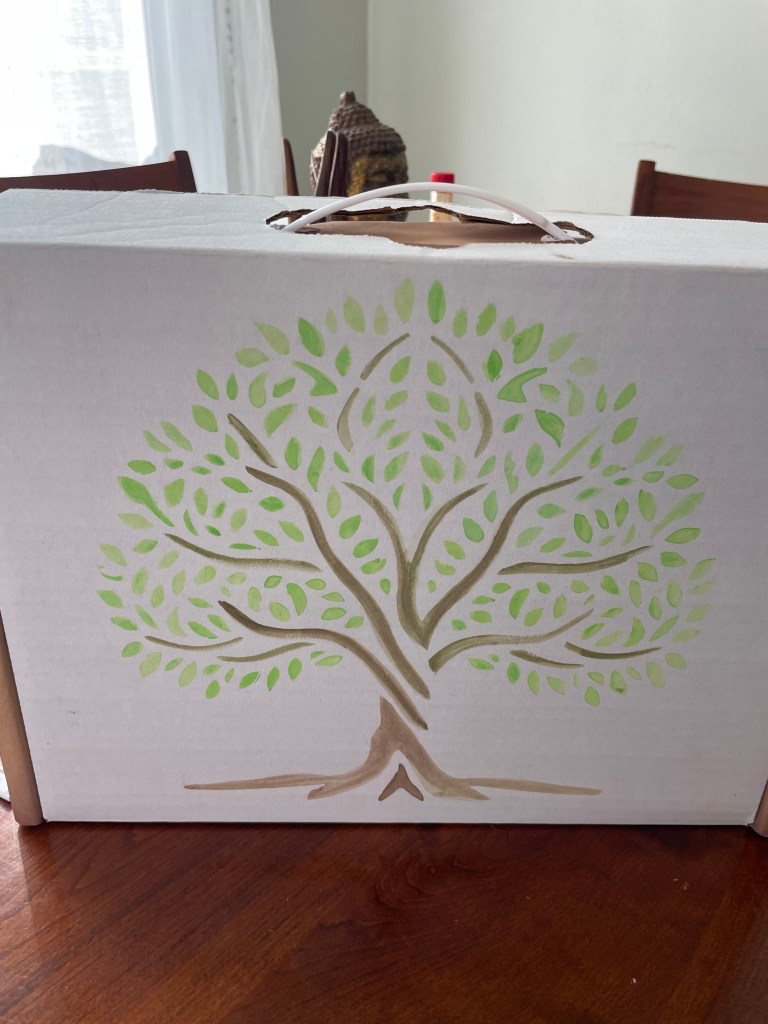
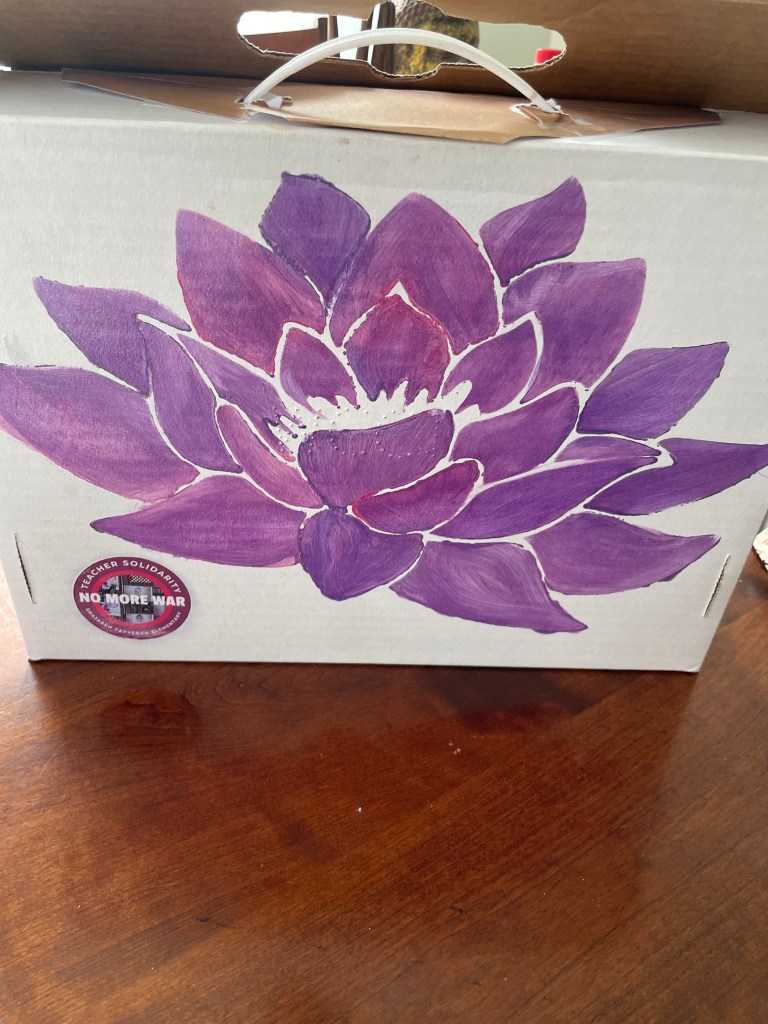
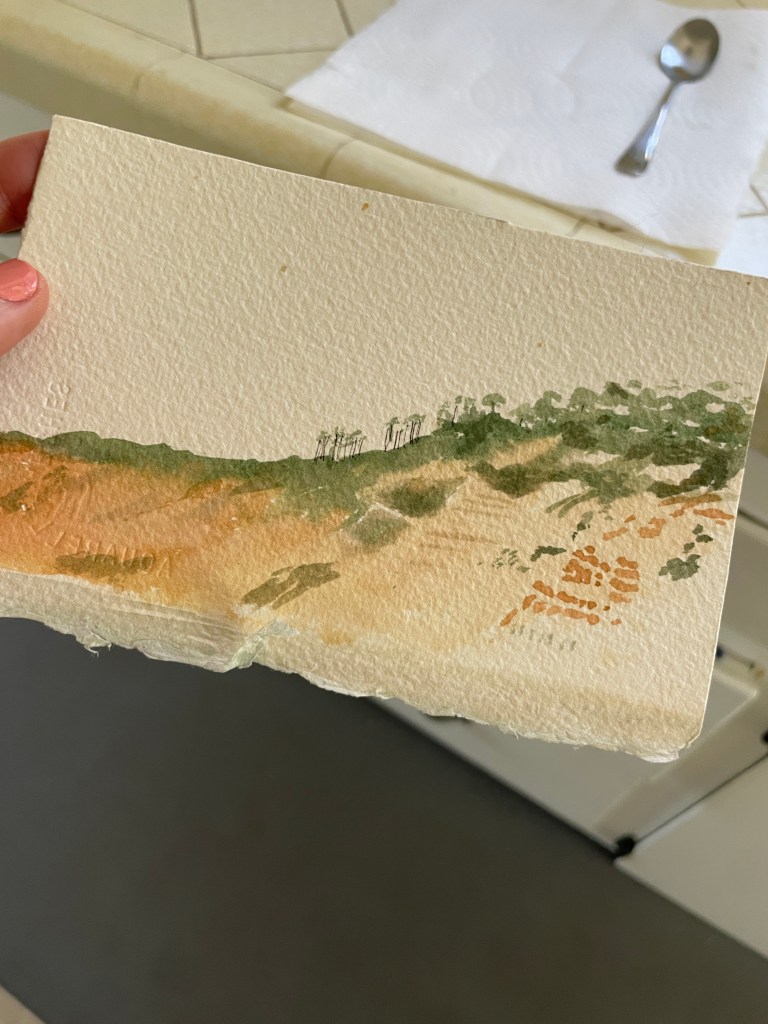
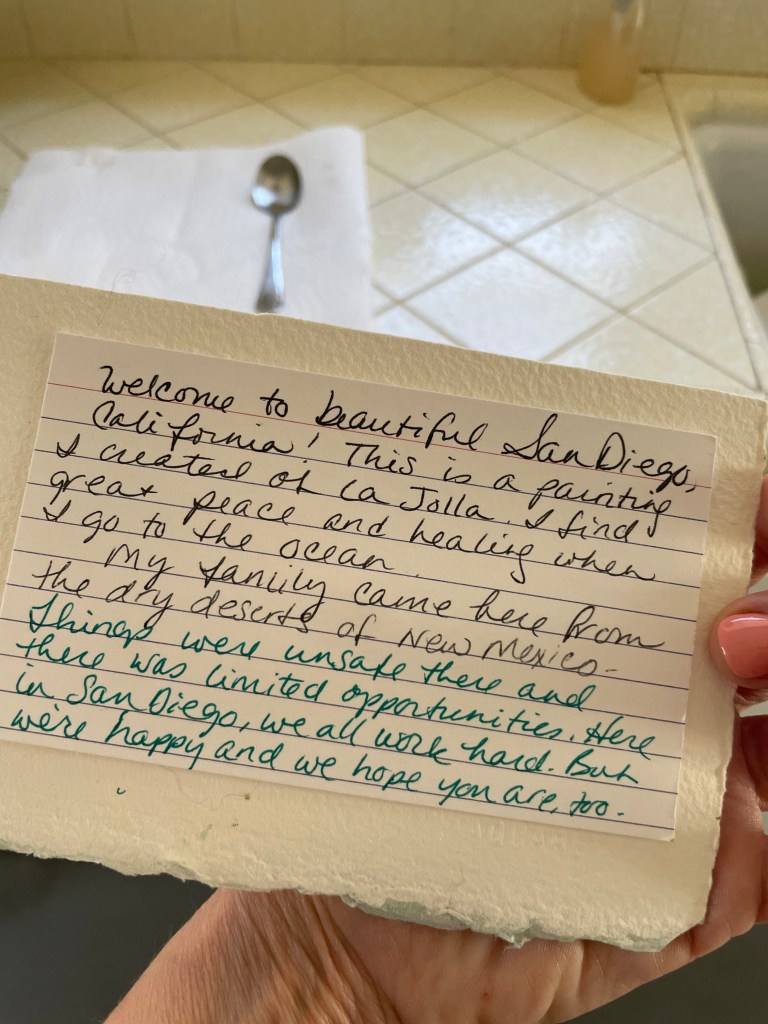
Hand-painted postcard with a message of hope.
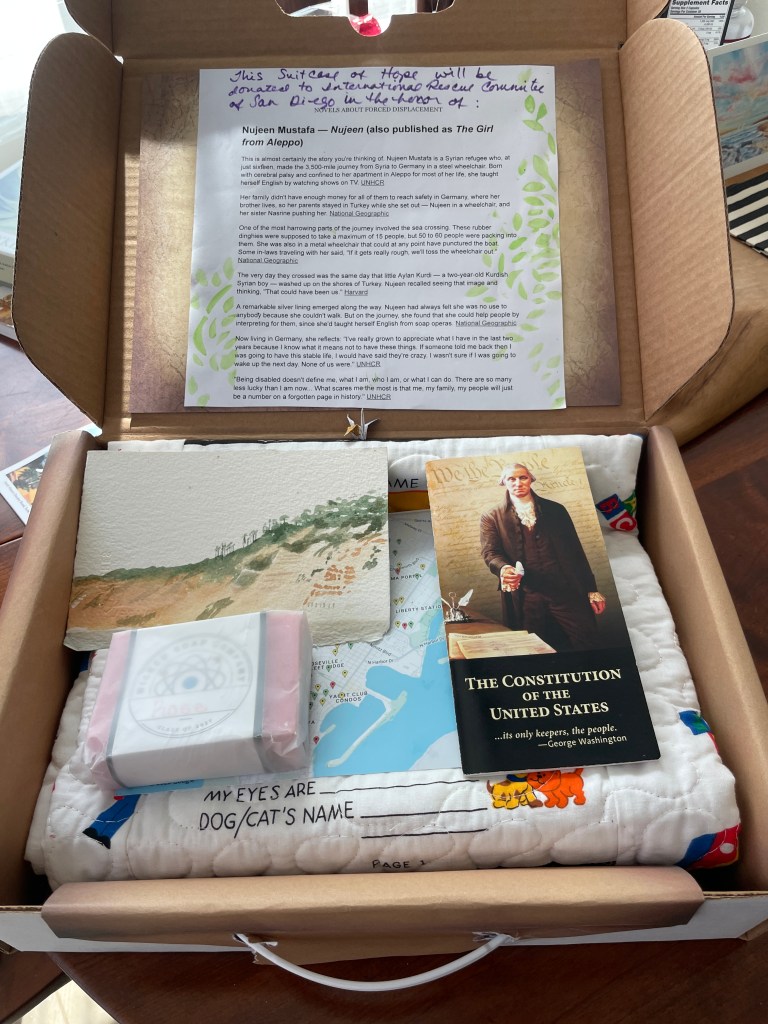
What’s in the Suitcase?
A one pager about Nujeen Mustafa.
A dedication of donation to a relief organization in the honor of Nujeen.
Hand Made Soap made in chemistry class
A hand made quilt
A map of relief services in San Diego

A Constitution of the United States
Instead of filling the suitcase with a bunch of inanimate objects, I remember thinking “how are you going to keep it from ending up in the dumpster?” So, I pivoted, and started thinking, “What would be of use in this suitcase?”
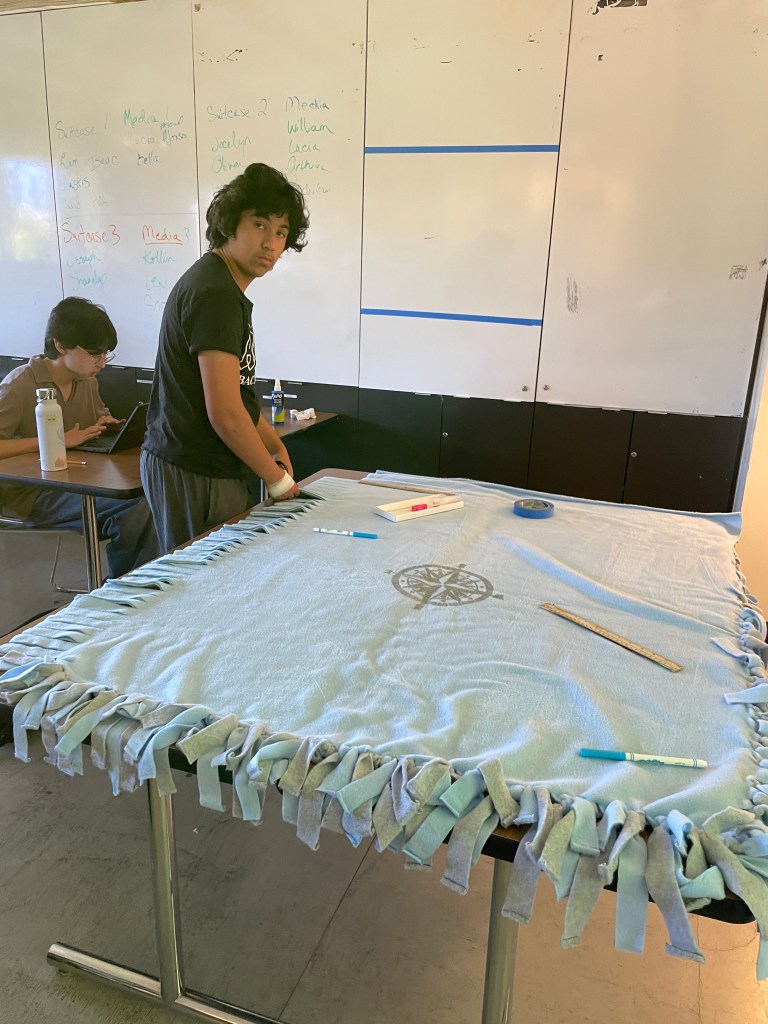
Blanket prototyping in History Class. 1 blanket takes 2 hours for 1 person, or 30 minutes with 4 dedicated “blanketeers”.
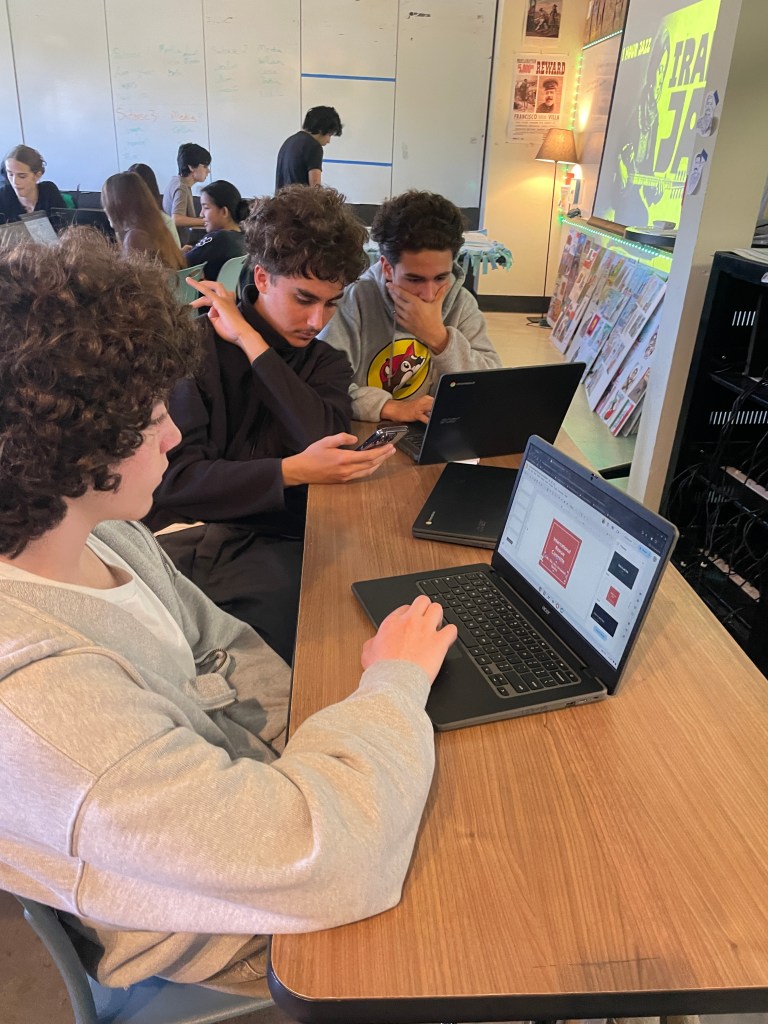
Meanwhile, the Media crew is researching and building a slideshow about a relief organization they chose to partner with.
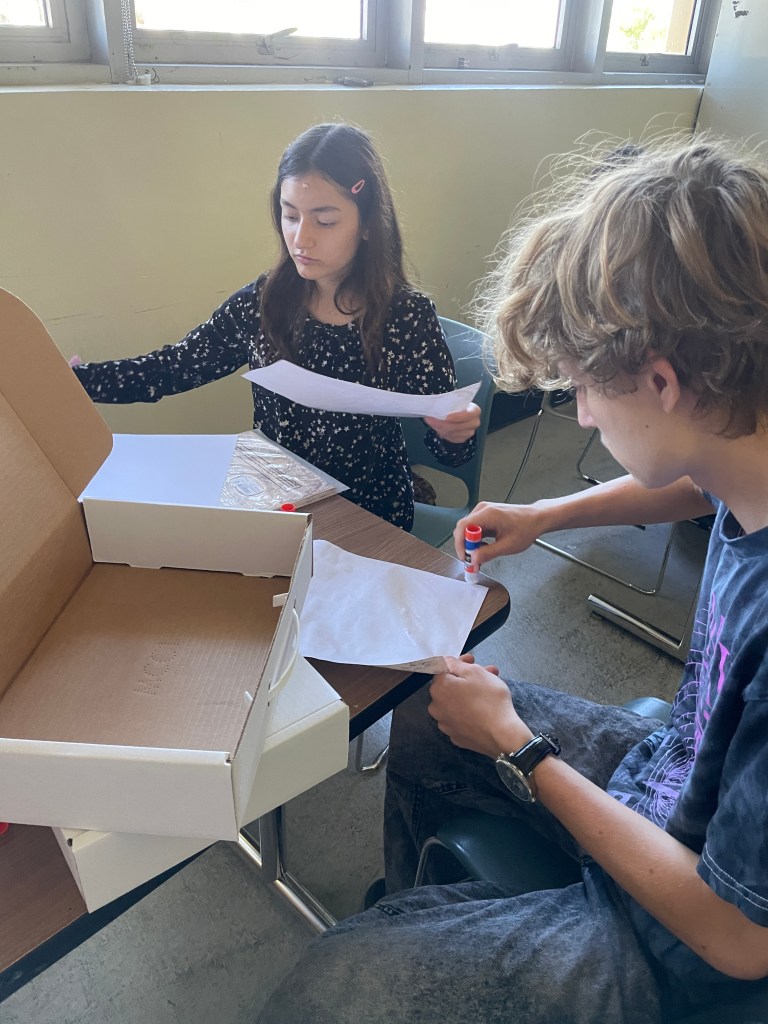
Station 3 is suitcase construction/design. These are quick but require reinforcements, like duct tape. This part of the design will be student-led.
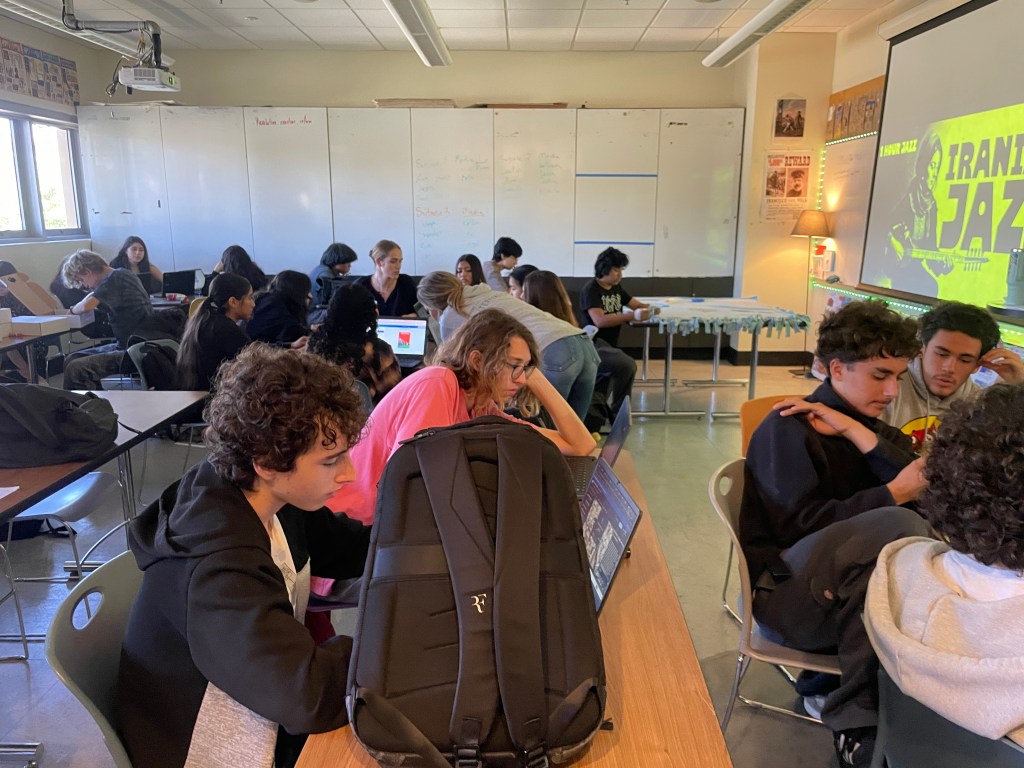
In a test run with stations, the project protocol produced busy students, all with different deliverables, but with a common mission. Having the different stations is a success.
I arranged the arts and crafts tables over by storage, and media/research headquarters by the computer caddie.
I am going to clear off my desk and other surfaces to create good systems for art supplies, and blanket supplies. Otherwise, my class will be a disaster and I’ll constantly be losing time and energy looking for things for students.
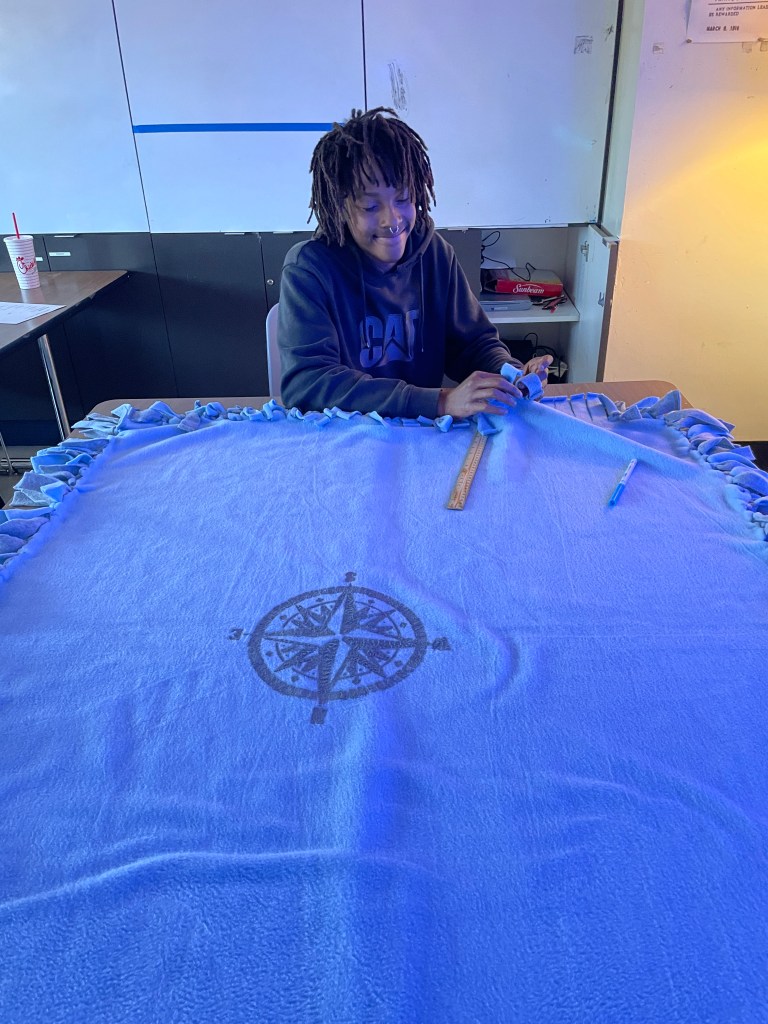
I have plenty of fleece. All that is needed is a ruler and tailor’s chalk. Keep a package of hand wipes at the blanket station so that there is a thorough wipe down before putting a blanket on the table, and wipes to clean your fingers before touching the fleece. They will get chalk on them from making the cut marks. Also, I used a stencil and fabric paint for the design. Next time, I will place a paper underneath to catch paint that seeps through the fabric. I will also tape all four sides of the stencil so that it doesn’t move. Upon reflection, I would recommend using a light amount of paint instead of “gooping” it on like I did. I think fabric spray paint would be the obvious ideal choice.
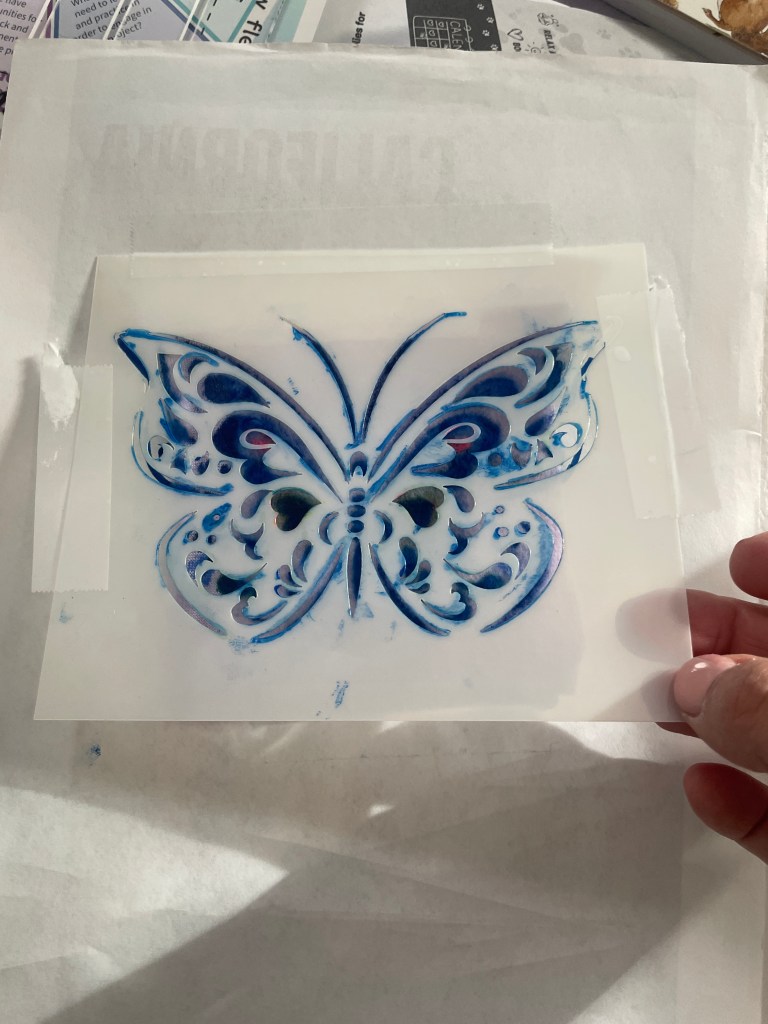
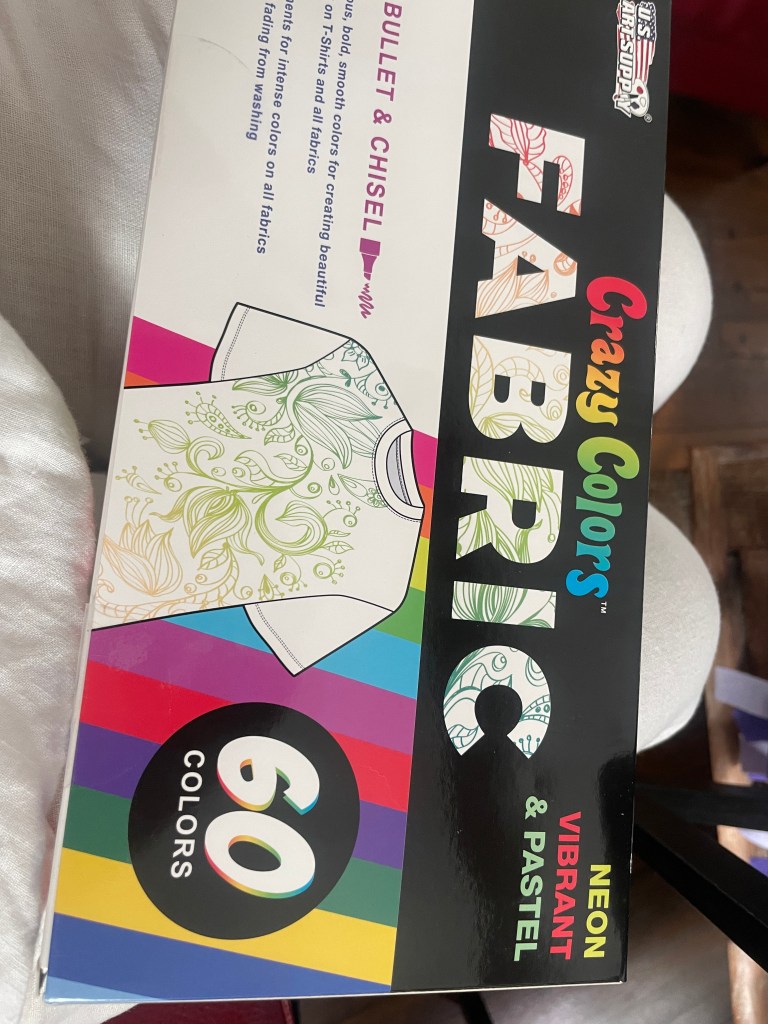
In the new iteration, I decided to try fabric marker with fine tip instead of painting on the fleece.
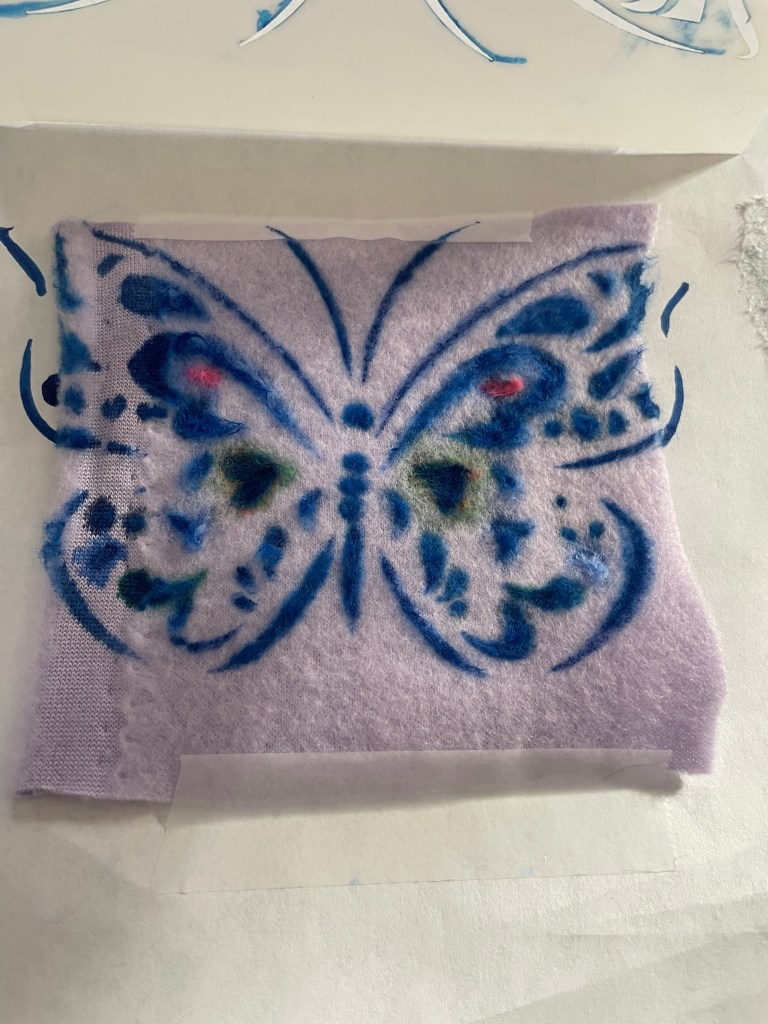
I practiced on a piece of scrap fleece that was removed off all four corners of the no-sew blanket. From that came the realization that we needed a separate station just for painting fleece and practicing what we’re going to paint. I am still learning what works best with painting. I think the pens are much better for details. And they really show up nicely on the lighter colors, not at all on the darker colors as I had hoped.
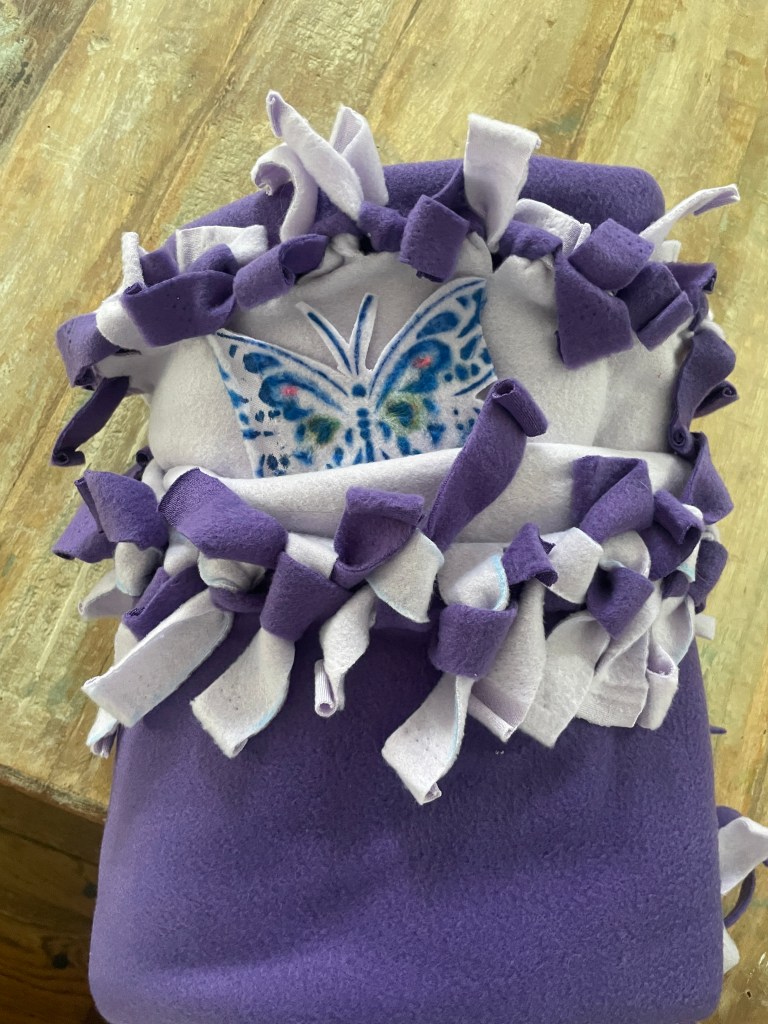
Iteration Blanket #2:
Let’s see what happens when we apply their previous knowledge of creating/painting alebrijes to our suitcase.
Prepping the suitcase.
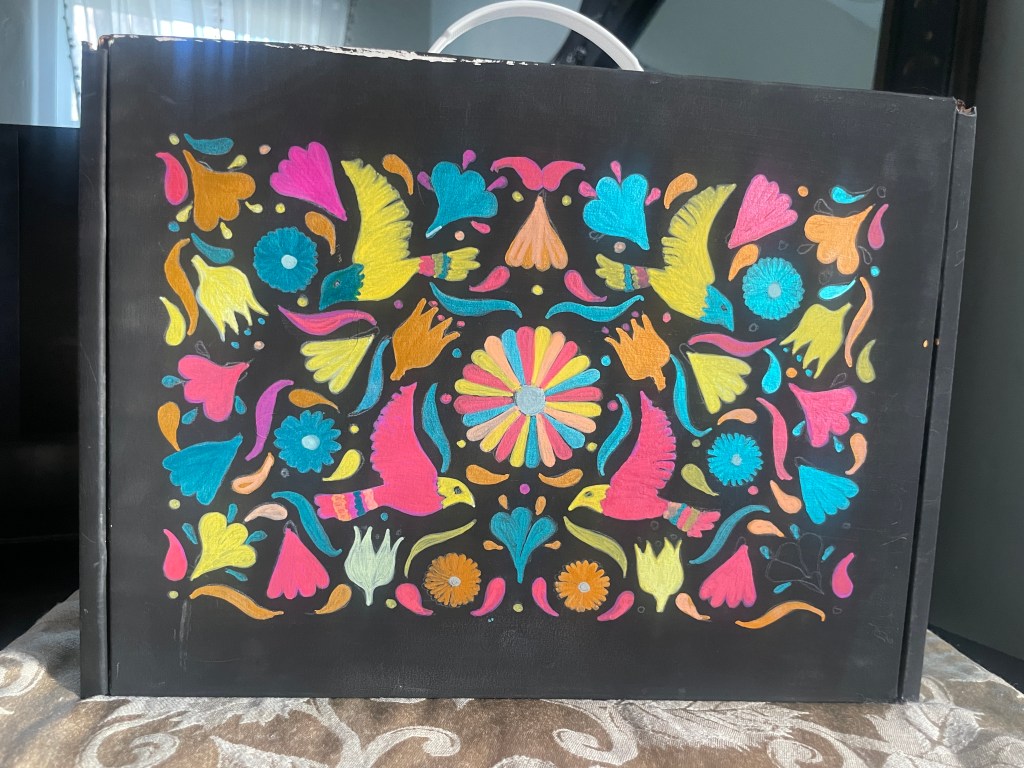
I started by applying black gesso on one side. It’s important to go in the same direction. Let dry. Then go in a cross-hatch direction. Let dry. That way you won’t have streaks on your painting.
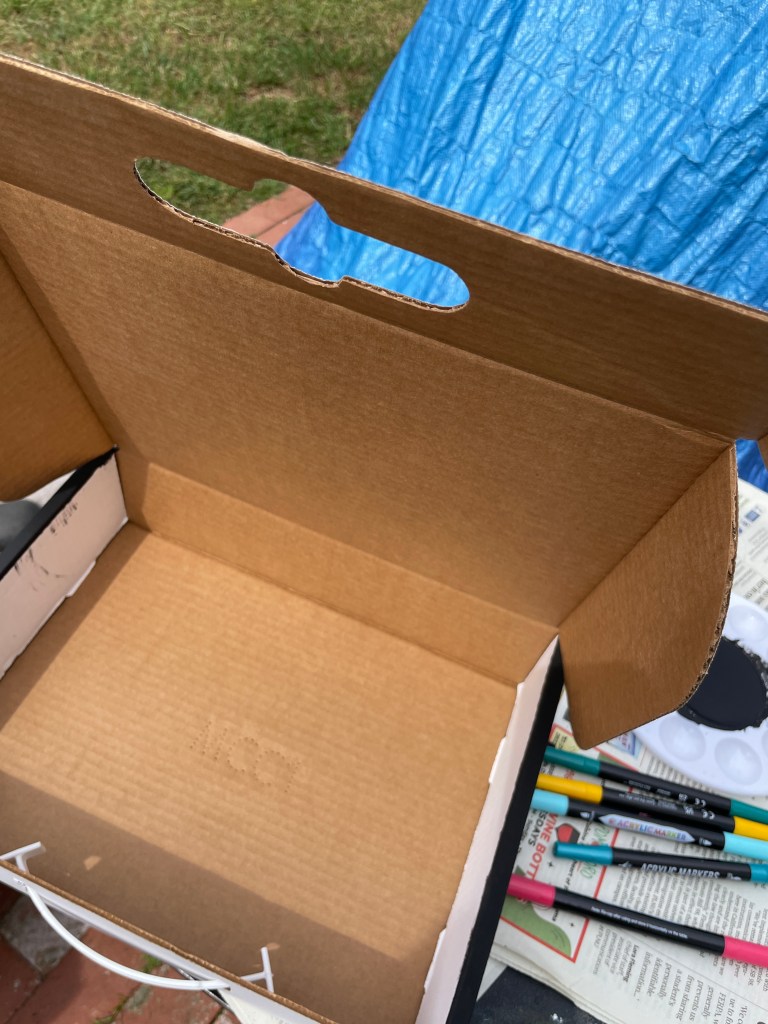
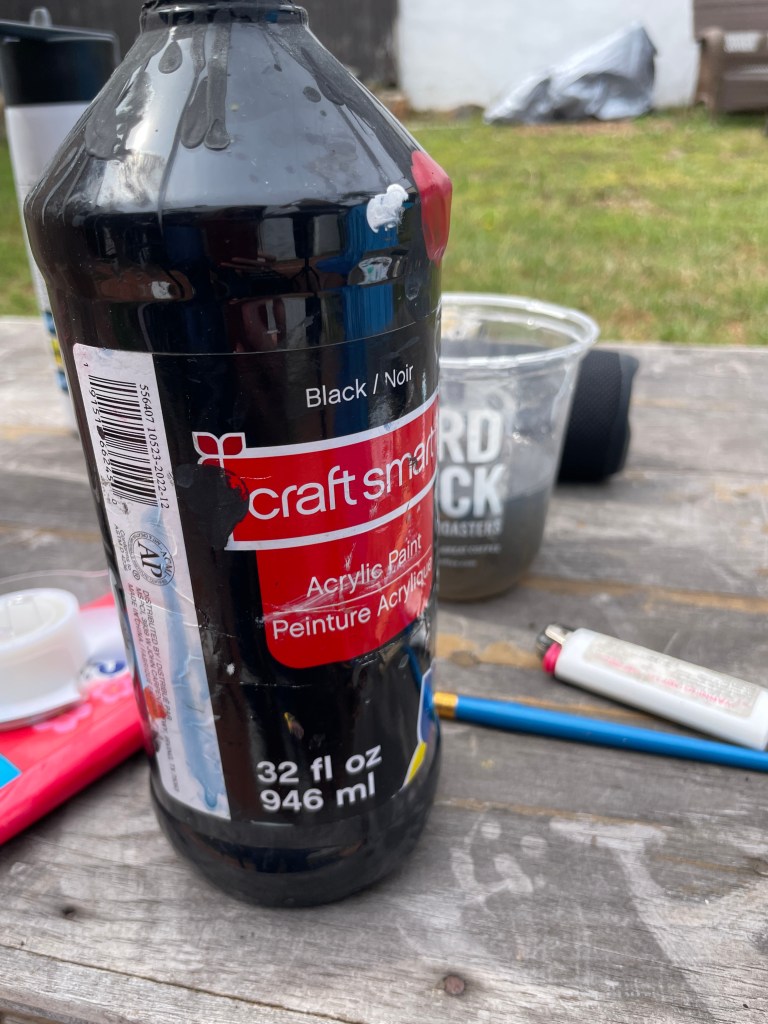
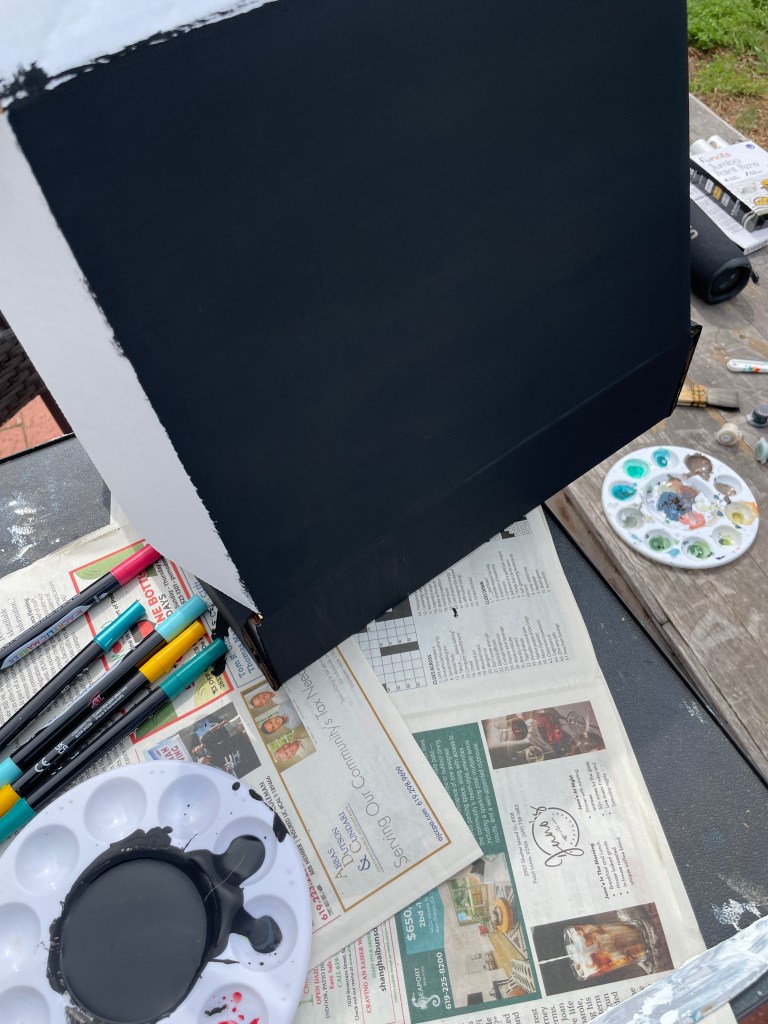
Time to select the reference. I searched “alibreje wallpaper” to find this incredible pattern. I printed it out, and taped it gently onto the dried surface. Students are very familiar with tracing after the Loteria project. They’ll do the same thing with this project, only they will be painting on black with the acrylic marker pens. They will be surprised to see how vibrant and colorful the same markers are.
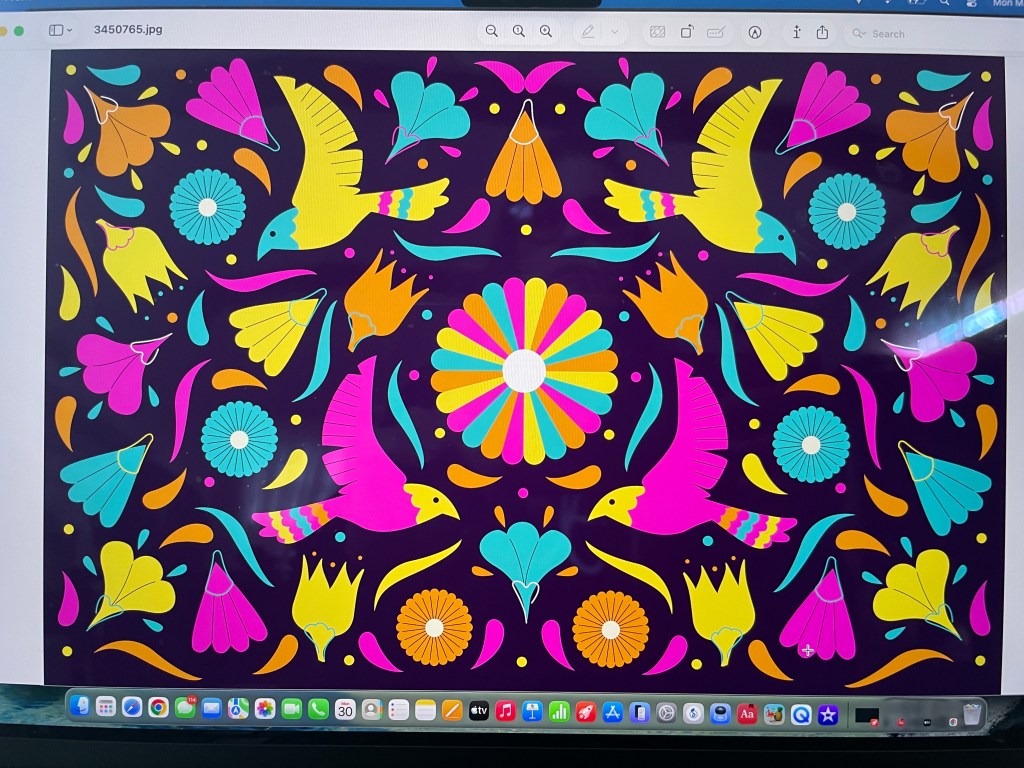
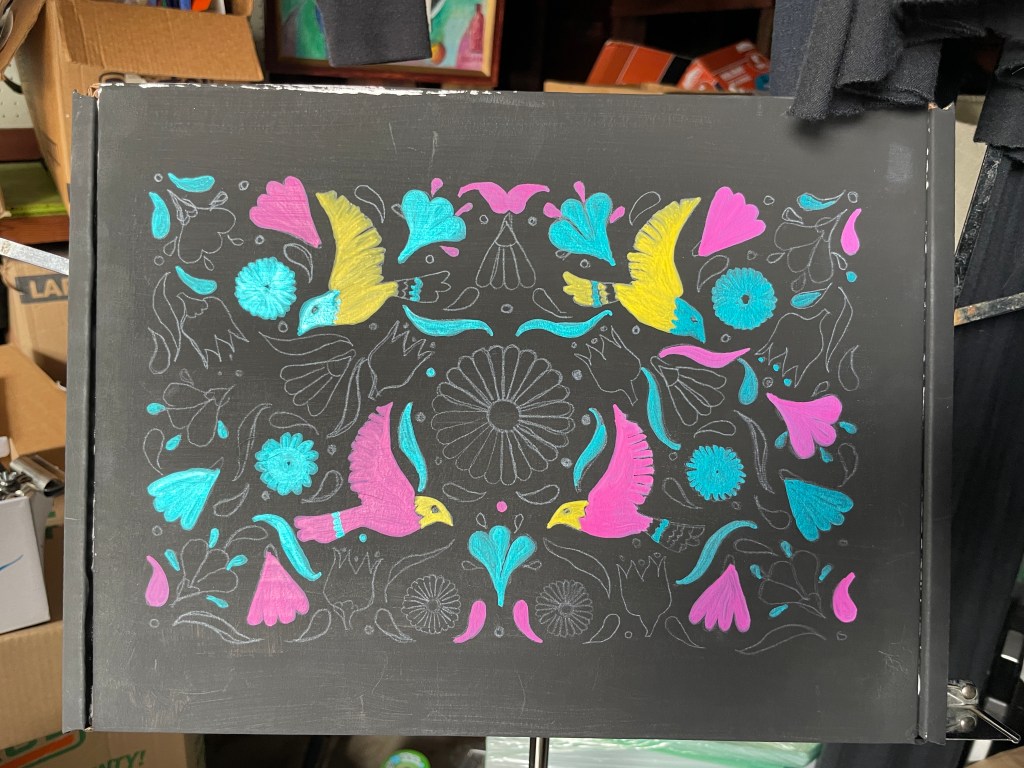
Tracing with white graphite paper onto the black matte surface. Then filling in with acrylic marker pens.
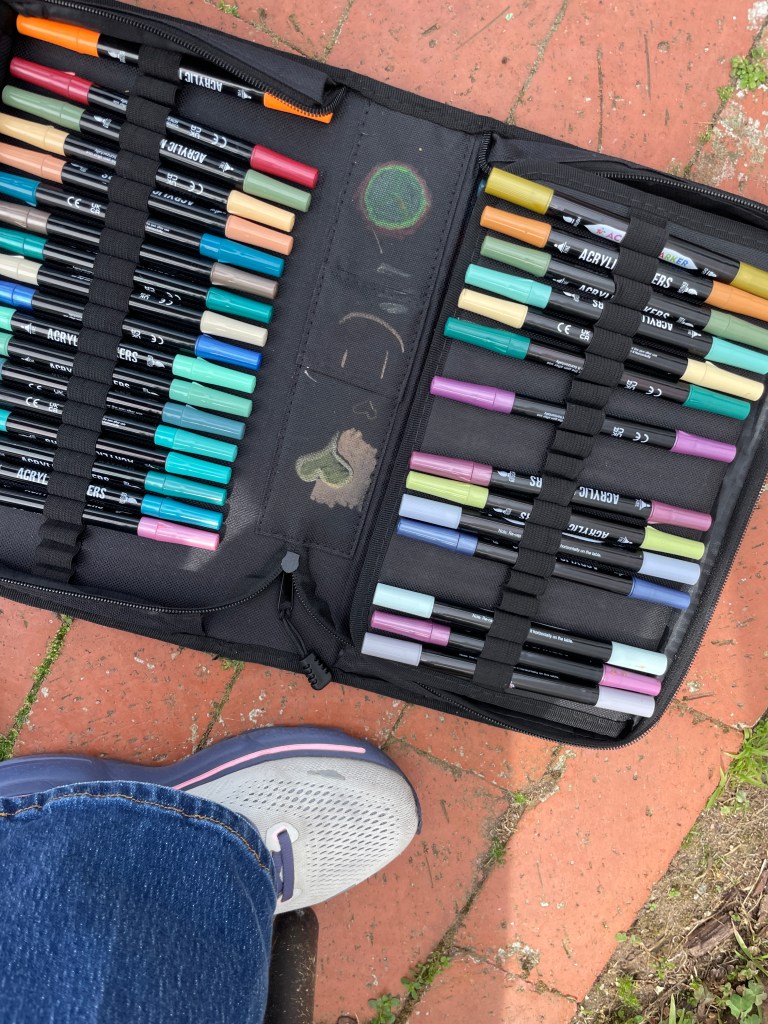
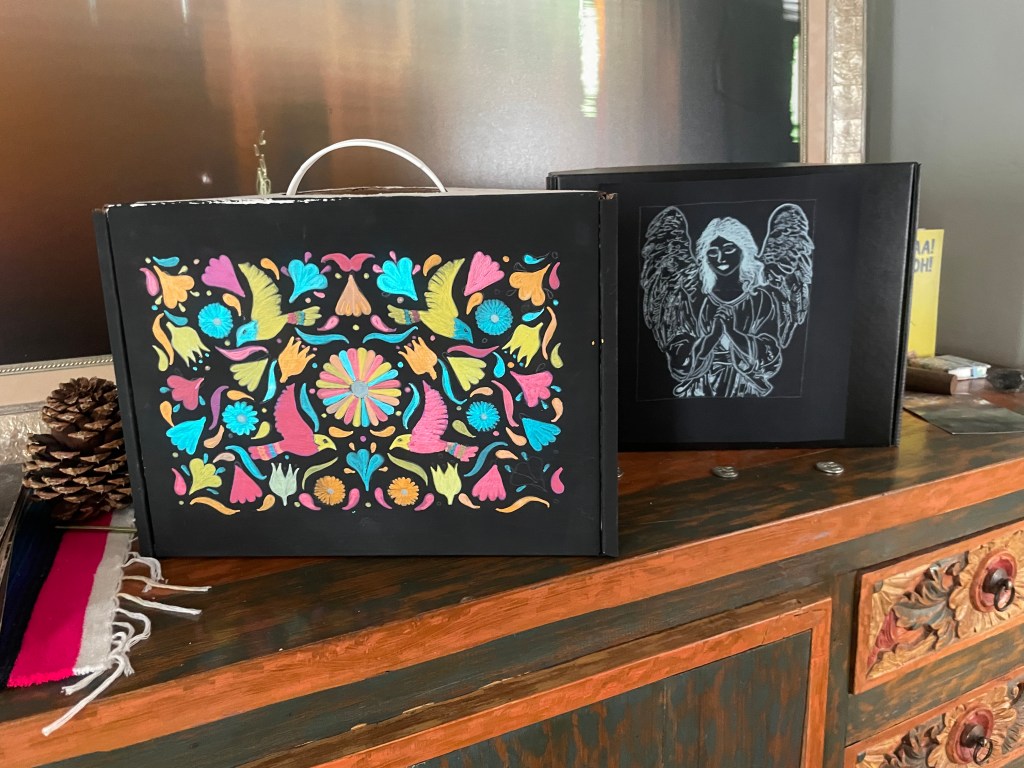
That worked!
Then I found some black construction paper and did the same thing, but with an angel reference. Her hair makes her look like a rock and roll angel!
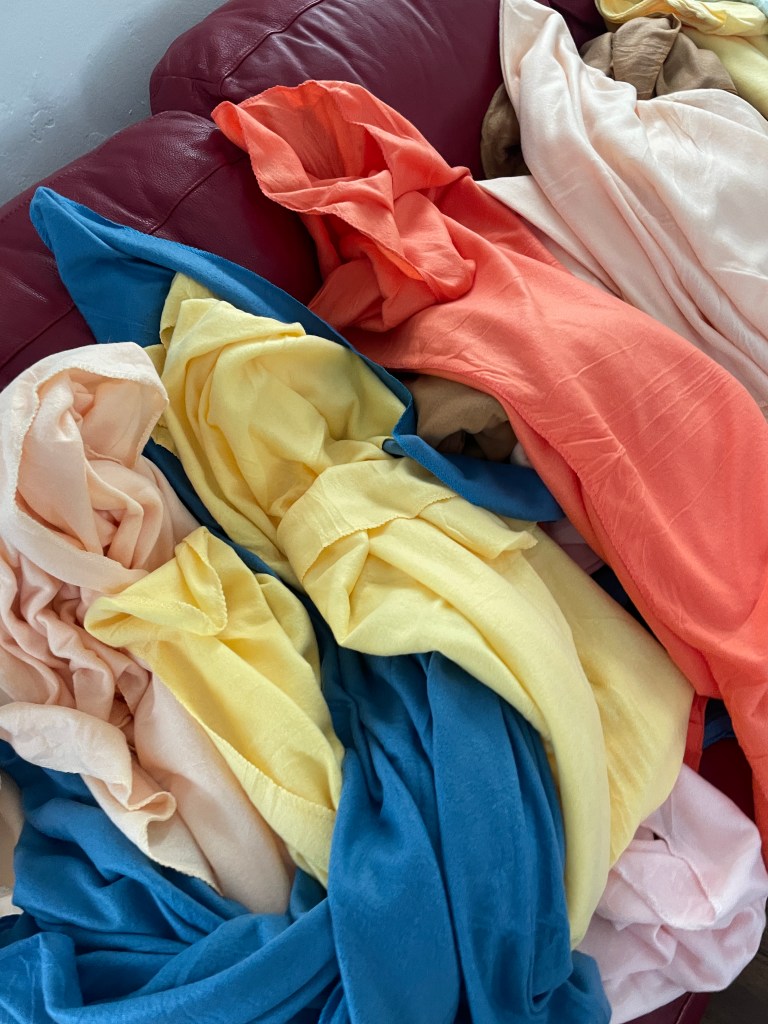
My husband and I went to Barrio Logan to a shop called Material Happiness. I told owner about our project and she donated a bunch of fabric! The fleece was very thin, so I put two pieces together. I started organizing by color theory, then I started to ask, “I wonder what colors Nujeen would pick?” That started the symbolic colors of a simple no-sew blanket.
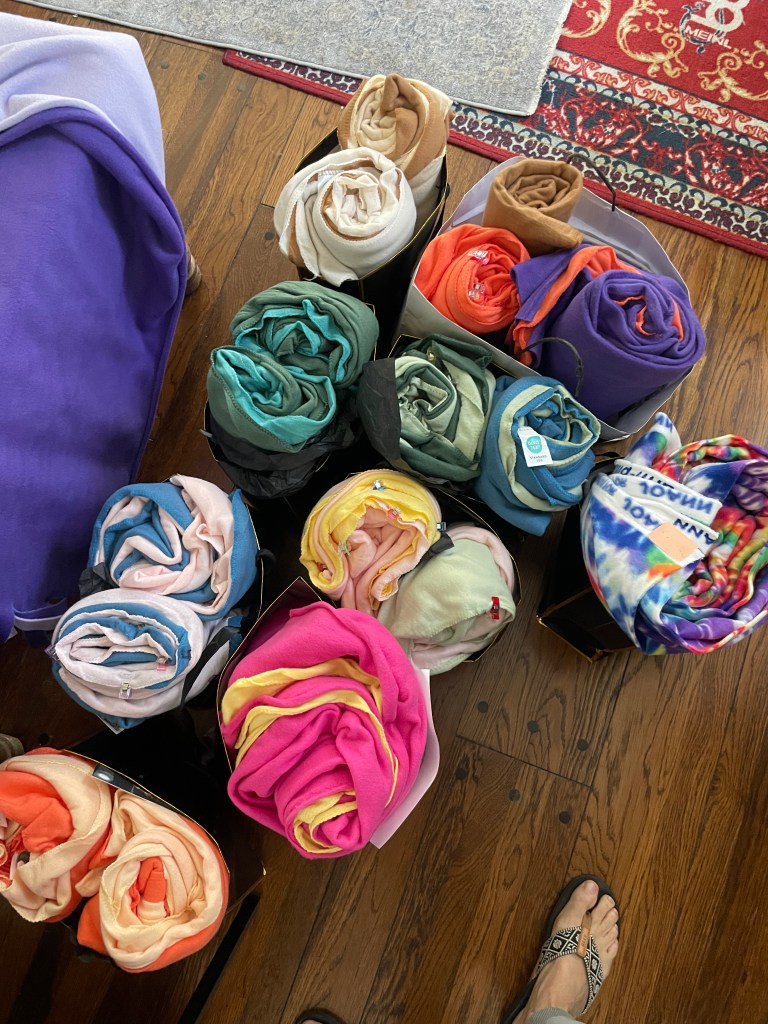
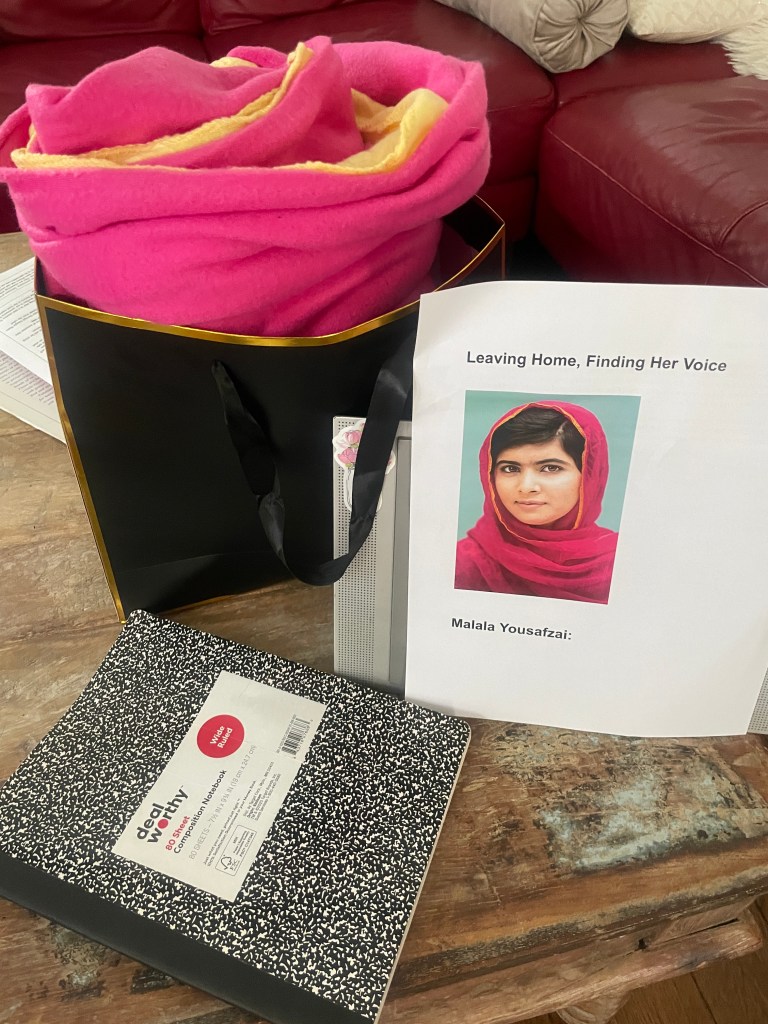
So, I kept going with the theme. Iteration #3: Here’s Malala’s 2 page narrative, blanket, and a notebook symbolizing her dedication to education.
I have since created the beginnings of Velices for Freddie Mercury, Albert Enstein, Dolores Huerta, and Yusra Mardini (the Olympic Swimmer from Syria who was on the Refugee Olympic team). All of my Velices represent heroes in my life who have experienced forced displacement. They have all fought hard to start over and bring awareness, hope and peace to the world.
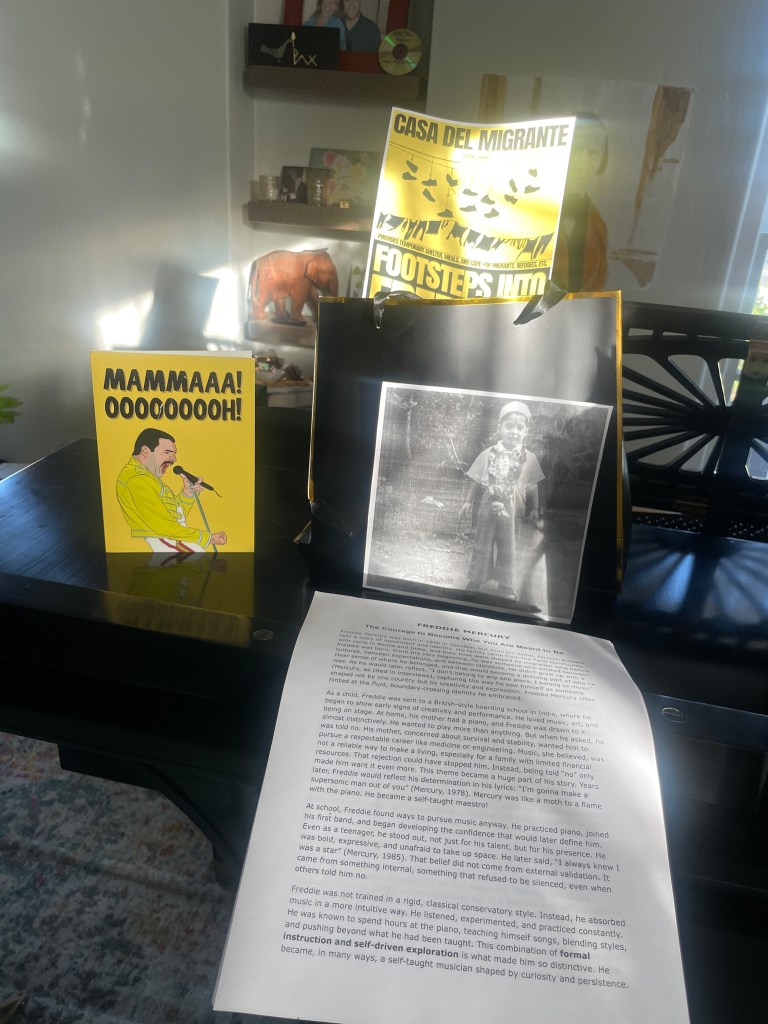
Then, I realized my students had the skills to create really incredible awareness campaigns for a relief organization that they care about or want to know more about. Here is a flyer one of my students made for Casa del Migrante, a refugee shelter in Tijuana, Mexico. This Freddie Mercury themed yellow and black fleece blanket will be donated there in his memory. Freddie Mercury (born Farrokh Bulsara) was forced to leave his home in Zanzibar due to political violence. He fled with his family to India, and ultimately to England where he shed his name and became the legendary Freddie Mercury.
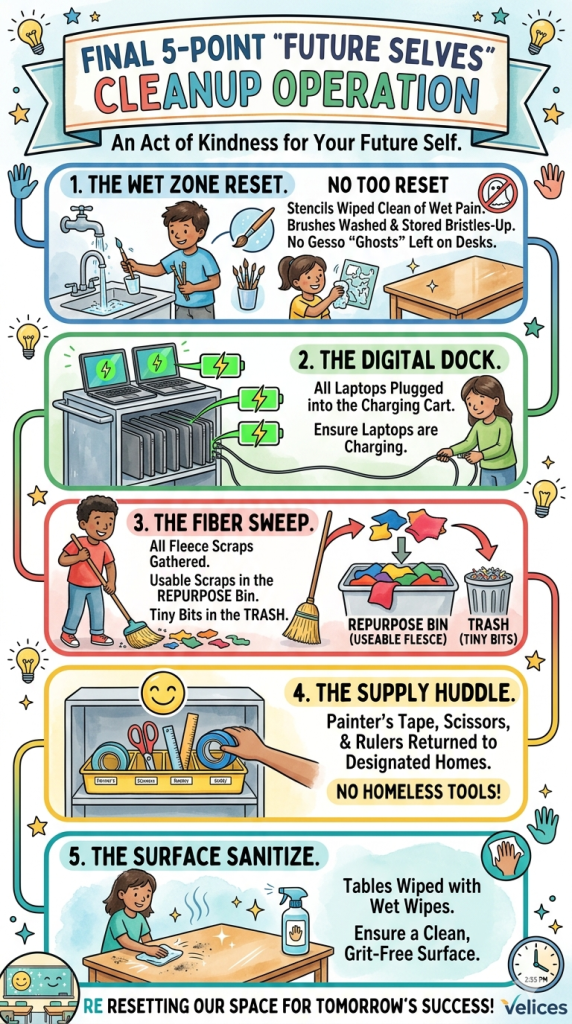
CLEAN UP PROTOCOL:
This project is really messy and blankets can easily get dirty and ruined if we aren’t careful. That’s why at this point I decided to create a cleanup protocol to have up on the board. We need to alot a good 10 minutes for this before leaving class at the end of the lesson.
REFLECTION:
This project has a lot of moving parts and it has revealed to me just how essential clear structures, routines, and systems are for success. With so much going on at once – research, collaboration, suitcase creation, blanket construction, art, writing, community engagement – I am seeing that consistency across all class periods, days, and weeks is critical. Moving forward, each class will follow a predictable schedule that includes norm-setting, individual and collaborative work time, and structured reflection, and clean up time to ensure that all studetns can access the goals of this project.
This interdisciplinary project integrates a wide range of standards across content areas. In World History, students are engaging deeply with CHSS 10.7.1 and CHSS 10.7.3, as they analyze the political, economic, and social forces that lead to instability and displacement. Students are not only learning historical content, but also applying it to modern global issues, which strengthens their ability to think critically about patterns across time and in our current geopolital climate.
Most importantly, this project centers on civic engagement and social responsibility, aligning with California’s emphasis on preparing students for active participation in a democratic society. Students are not only learning about global crises and forced displacement, but are also taking informed action by developing empathy, agency, and a sense of responsibility towards others. I am excited for my students to dive in and make a difference, even if it means they might make a mess.
This experience is pushing me to edit. I have always been a well- spring of unlimited ideas, but it is critical that I learn how to balance structure with rigor so that we can have a successful project worthy of a museum exhibition. And more importantly worthy of the heroes who are being honored through our efforts, time and commitment to telling their stories.
I would love for this experience to teach my students that even the smallest acts can make a meaningful difference, and that the work they do has the power to live on beyond our time together in 10th grade World History. There will always be organizations in need of blankets, soap, or simply a simple handwritten message of hope. Each of us has something to valuable to offer. In many ways, that’s what being human is all about. Above all else, I hope my students carry that lesson with them.
 Amber Jordan Hendren